
Obreal strengthens its Caribbean agenda during an institutional visit to the Dominican Republic
Obreal made an institutional visit to the Dominican Republic to deepen its work in the Caribbean and advance the Interregional Dialogue Process, a platform connecting Africa, Latin America and the Caribbean, Europe, the Arab world, and other international partners around shared priorities in education, science, innovation, development, and inclusion.
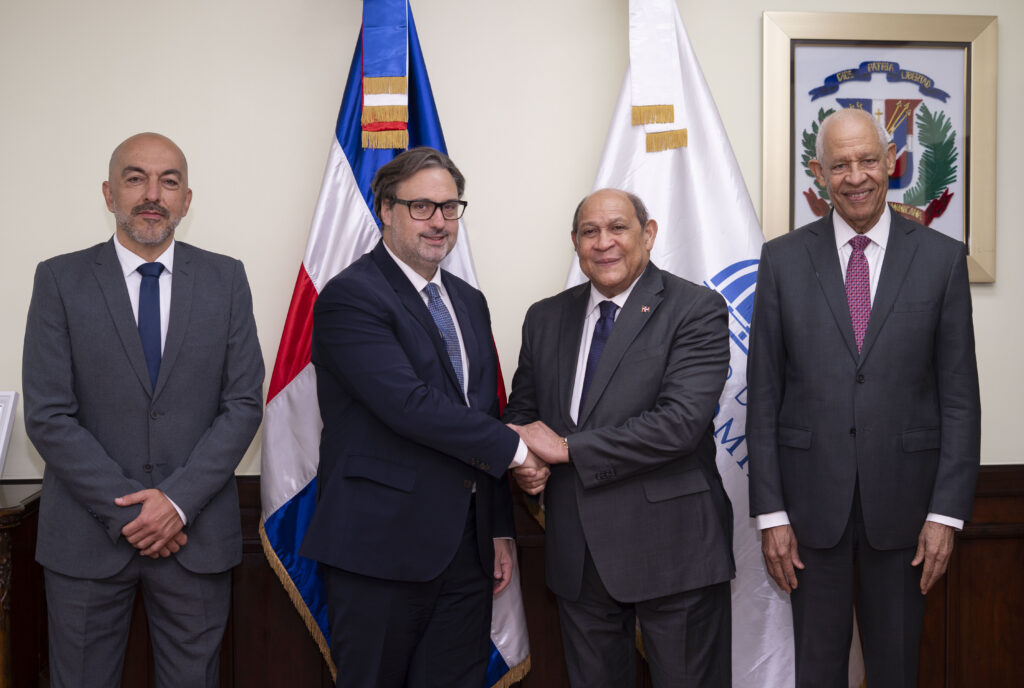
The visit was led by Nicolás Patrici, Obreal’s Director of Strategy and Development, accompanied by Juan Guillermo Hoyos Aristizábal, who heads Obreal’s office in Colombia and its institutional outreach to the Caribbean. The agenda, held on September 21 and 22, included meetings with the Minister of Higher Education, Science and Technology, Dr. Rafael Santos Badía; the Deputy Minister for Bilateral Foreign Policy at the Ministry of Foreign Affairs, Ambassador Francisco Caraballo; the Mayor of the National District, Carolina Mejía; the Chancellor of Universidad del Caribe, José Alejandro Aybar; UNAPEC officials; and representatives of the Instituto Técnico Superior Comunitario, whose role in higher technical education is particularly relevant to connecting education, employability, and territorial development.
The agenda was facilitated and coordinated locally by Dr. José Ramón Holguín, who participated in the Third Interregional Dialogue in Bogotá and has since helped strengthen a Caribbean perspective on the process. His support helped connect the interregional discussion with relevant Dominican stakeholders, link it to the country’s development priorities, and extend it to institutions capable of sustaining a cooperation agenda that brings together education, training, territorial development, and innovation.
The Dominican Republic as a leading Caribbean actor
The discussions in Santo Domingo advanced a shared understanding of the importance of a clearer, more visible, and more active Caribbean presence in international conversations on education, higher education, science, innovation, and development.
For Obreal, the Caribbean is not a secondary dimension of the relationship between Africa and Latin America. It is a region with its own history, institutions, languages, vulnerabilities, capabilities, and priorities. Truly interregional cooperation requires Caribbean voices to be included not merely as part of a geographic label, but as actors capable of shaping the agenda, setting priorities, and putting forward their own proposals.
In this context, the Dominican Republic holds a particularly relevant position. Its institutional scale, regional location, university system, influence in the Spanish-speaking Caribbean, and ability to engage with Latin America, Africa, Europe, and other partners enable the country to contribute to a phase in which the Caribbean dimension of the interregional process gains greater political and institutional substance.
Alignment with Dominican priorities in higher education
In the meeting with Minister Santos Badía, Obreal and the Ministry of Higher Education, Science and Technology agreed on the importance of amplifying Caribbean voices in education and development. The discussion positioned the Dominican Republic not only as a potential meeting place, but also as an actor capable of articulating distinct Caribbean priorities within an interregional framework linking Africa, Latin America, and the Caribbean.
Obreal also heard about Dominican priorities in higher education, science, and technology. These include transforming the education system to address the challenges of the global economy, artificial intelligence, and the fourth industrial revolution; strengthening research, science, and technology; consolidating a more coordinated, efficient higher education system focused on sustainable development; university internationalization; attracting international students; training for the jobs of the future; innovation; knowledge transfer; and incorporating fields such as artificial intelligence, robotics, science, mathematics, cybersecurity, and emerging technologies.
These priorities align directly with Obreal’s ongoing work in interregional cooperation, institutional strengthening, qualifications, applied research, academic mobility, and capacity building across regions.
Santo Domingo as a meeting place for interregional dialogue
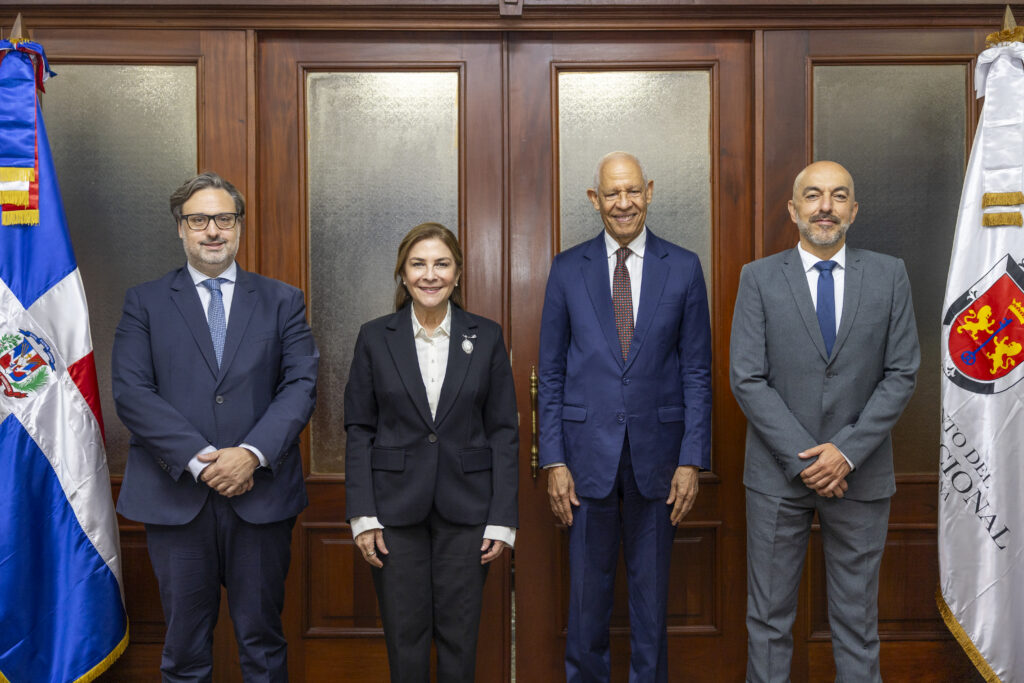
The discussion with the Mayor of the National District, Carolina Mejía, explored the possibility of Santo Domingo hosting a future edition of the Interregional Dialogue, positioning the city not only as a logistical venue, but also as a Caribbean capital capable of advancing an agenda of education, culture, youth, innovation, international cooperation, and urban development in dialogue with Africa, Latin America, and the Caribbean.
This urban dimension is central to the process. The Interregional Dialogue goes beyond bringing institutions together. It seeks to create spaces where governments, universities, cities, regional organizations, and international partners can align shared priorities and turn them into concrete cooperation.
A Caribbean agenda connected to building regional and interregional bridges
The visit is part of Obreal’s broader work in the Caribbean. Through its initiatives in interregional cooperation, policy dialogue, higher education, applied research, qualifications, and regional coordination, Obreal has been advancing an agenda that seeks to connect Caribbean institutions with Latin America, Africa, Europe, and other partners.
This agenda also aligns with cooperation priorities linked to the Global Gateway framework, particularly in areas such as education, qualifications, the digital transition, cybersecurity, renewable energy, water, sargassum management, the blue economy, applied research, and capacity building.
The visit identified convergence between Dominican priorities, Caribbean challenges, and ongoing areas of interregional work. These include the transformation of higher education, university internationalization, applied research, academic mobility, recognition of qualifications, technical and vocational education and training, digitalization, cybersecurity, the blue economy, sargassum management, territorial development, youth, and inclusion.
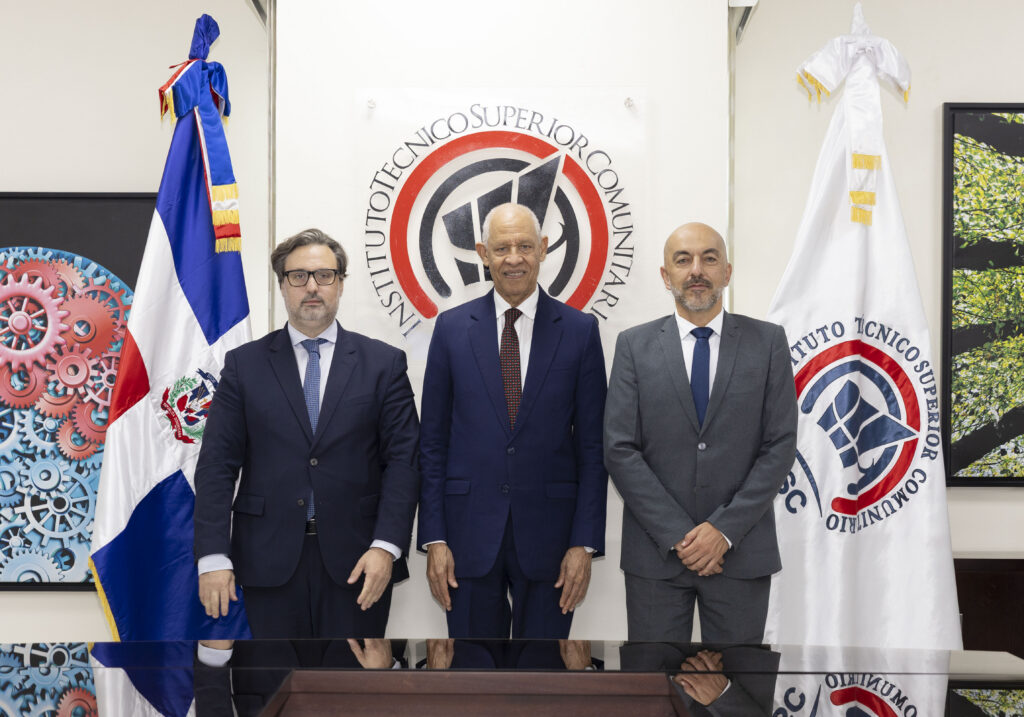
Within this agenda, the visit to the Instituto Técnico Superior Comunitario was particularly valuable. ITSC connects the interregional discussion with a central dimension of development policy: higher technical education, employability, social mobility, applied innovation, and the relationship between education and productive sectors. Its community and territorial focus reinforces a key idea for Obreal: higher and technical education not only trains professionals, but can also coordinate capabilities, expand opportunities, and contribute to local and national development.
Obreal will work with Dominican institutions to identify shared opportunities and build regional and interregional bridges. This work will seek to connect Dominican and Caribbean priorities with partners in Africa, Latin America, Europe, and other regions, as well as with the institutions participating in the Interregional Dialogue.
The participation of universities, public bodies, local stakeholders, and regional partners is essential to this process. The Caribbean agenda cannot be built solely through diplomacy or academia. It requires connecting public policy, higher education, science, cities, territories, culture, youth, innovation, and international cooperation.
Toward Addis Ababa and the next phase of the Dialogue
The Interregional Dialogue on Education and Development is a political, academic, and institutional process that brings together governments, regional organizations, universities, research centers, scientific networks, funding agencies, and multilateral institutions. Following editions in Buenos Aires, Addis Ababa, and Bogotá, the fourth edition will return to Addis Ababa on December 13–17, 2026, at the African Union headquarters.
This edition will mark a phase of implementation and expansion of the process, aimed at translating interregional cooperation into concrete work agendas, instruments, and initiatives. With this in mind, the visit to the Dominican Republic opened a discussion on the role the country and Santo Domingo could play in a subsequent phase of the Dialogue, guided throughout by an agenda linked to Dominican priorities and the amplification of Caribbean voices.
A potential Dominican agenda should go beyond providing a logistical venue. It should reflect a Caribbean perspective on the interregional process and connect higher education, science, innovation, cities, culture, youth, territorial development, and international cooperation.
Through this visit, Obreal strengthens an area of work it considers central to the next phase of the interregional process. The Caribbean is more than a transit point between regions. It is a political, cultural, academic, and strategic space from which distinct responses can be developed to shared challenges in education, science, innovation, inclusion, sustainability, and development.