
Strategic partners meet in Barcelona to advance interregional cooperation
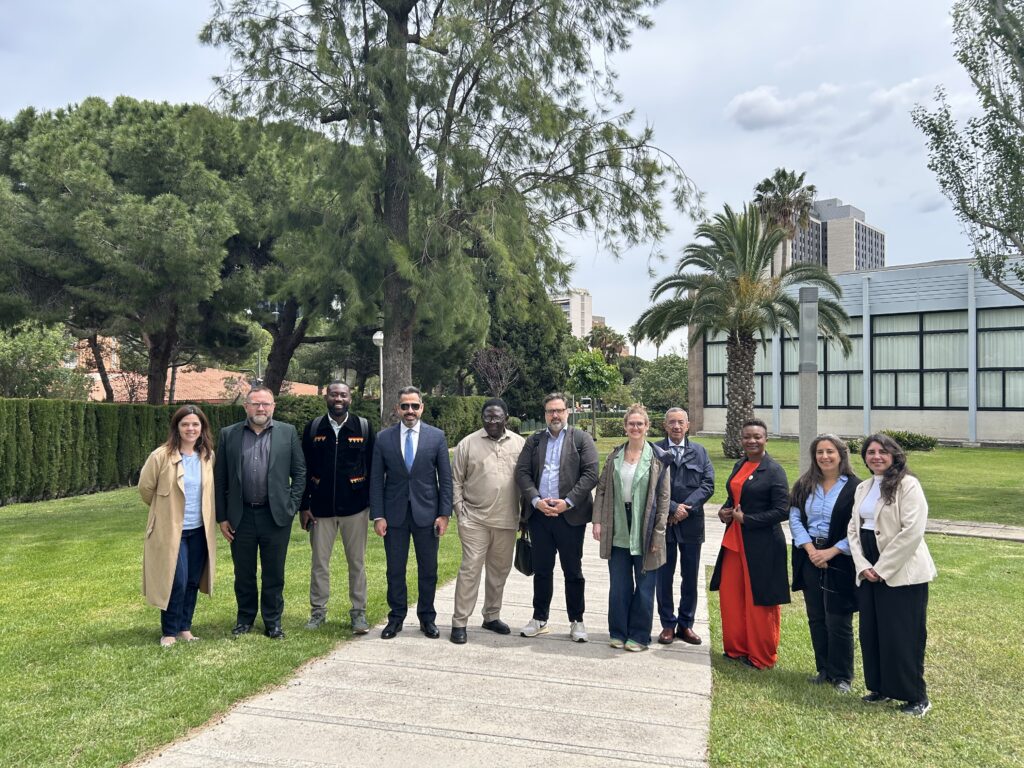
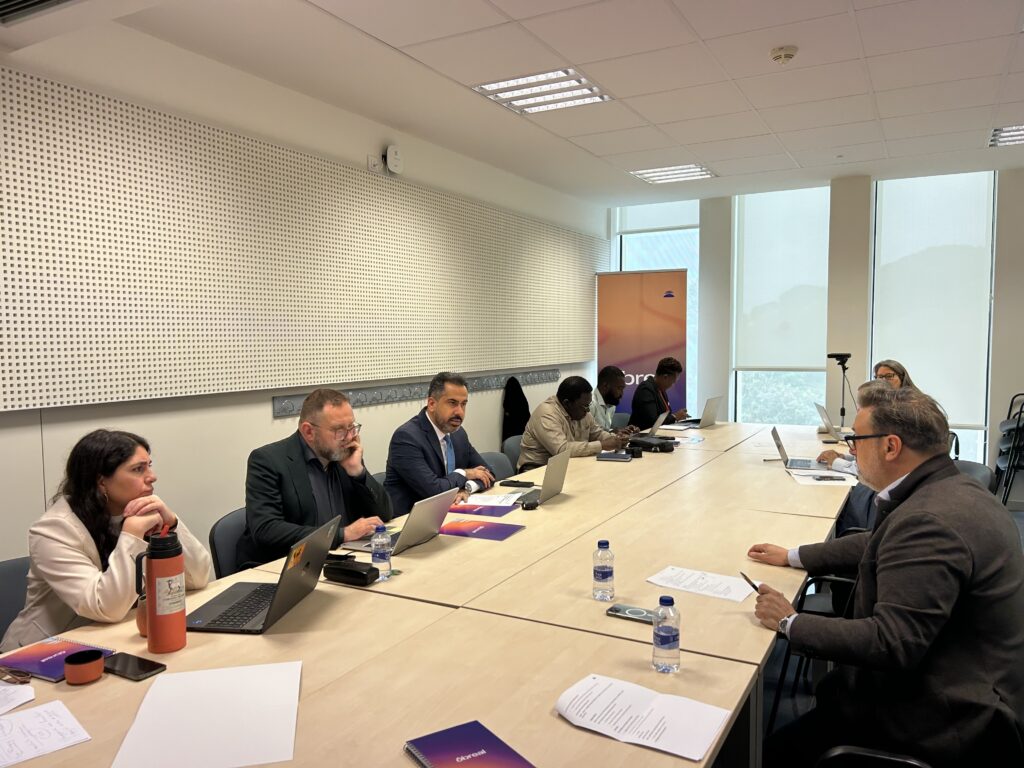
Obreal hosted a follow-up meeting in Barcelona as part of the Interregional Dialogue Process, bringing together regional institutions, university associations, and cooperation agencies from Africa, Latin America and the Caribbean, Europe, the Arab world, and China.
The meeting advanced a shared agenda for cooperation in higher education, science, innovation, and development. It also confirmed the gradual expansion of the process toward an increasingly polycentric and multilingual architecture, in which regions participate not as recipients of external agendas, but as active spaces for defining priorities, producing knowledge, and building capacities.
Representatives participated from the African Union Commission; the Pro Tempore Presidency of the Community of Latin American and Caribbean States (CELAC), currently held by Uruguay; the Association of African Universities; the اتحاد الجامعات العربية / Association of Arab Universities; the Deutscher Akademischer Austauschdienst (DAAD) of Germany; the Vlaamse Interuniversitaire Raad – Universitaire Ontwikkelingssamenwerking (VLIR-UOS) of Belgium; and the UNESCO International Research and Training Centre for Rural Education, based in China. The Coordenação de Aperfeiçoamento de Pessoal de Nível Superior (CAPES) of Brazil also participated remotely.
Shared priorities and upcoming interregional initiatives
During the meeting, participants identified joint priorities in science diplomacy, academic mobility, environment and climate change, energy, artificial intelligence, rural cooperation, and development. These areas will be further developed over the coming months through webinars and initiatives linked to the interregional dialogue process.
Among the topics discussed were a proposal for research fellowships for Colombian women researchers at African universities, promoted by the Government of Colombia in collaboration with the Pan African University; the outcomes of the High-Level Forum between Africa and CELAC organized by the Government of Colombia in Bogotá last month; and the Government of Brazil’s call for an Africa–Brazil university presidents’ meeting in May 2026, in which the Association of African Universities and Obreal will participate.
Reimagining interregional cooperation through multilingualism
Interregional cooperation consists of creating the conditions for actors from different parts of the world to define common priorities, produce shared knowledge, and sustain institutional capacities over time. In an international context marked by fragmentation, tensions surrounding multilateralism, and persistent inequalities in knowledge production, the Interregional Dialogue Process seeks to build a form of cooperation capable of connecting regions without reducing them to a single hierarchy.
Multilingualism is part of that architecture. It is not simply a matter of translating content between languages. It means recognizing that languages express different institutional memories, academic traditions, and ways of producing knowledge. Truly interregional cooperation cannot be organized as if a single language had already determined how the world should speak. The gradual incorporation of the Arab world — and Arabic as a working language of the process — and China — and Mandarin as a working language — together with Swahili, reinforces this orientation. It expands the scope of the process and confirms that interregional cooperation only makes sense when it recognizes the plurality of languages, institutions, and knowledge systems involved.