
Obreal and ANUIES strengthen capacity to develop international projects in northwestern Mexico
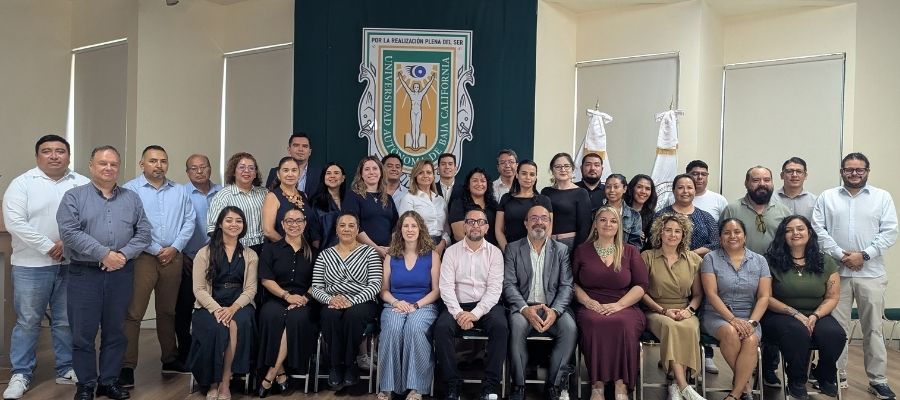
From August 25 to 27, Obreal and the National Association of Universities and Higher Education Institutions (ANUIES) held the second edition of their training program on the formulation and management of international cooperation projects in Tijuana.
Organized with the ANUIES Northwest Regional Council and the Autonomous University of Baja California (UABC), the event brought together international cooperation officers, academic and graduate studies staff, faculty members, and researchers from higher education institutions across the region.
Over three days, participants worked through the different stages involved in developing international projects, from identifying opportunities and analyzing calls for proposals to building partnerships, preparing proposals, managing resources, and evaluating results. The workshop paid particular attention to cooperation opportunities offered by the Erasmus+ program.
The training was delivered by Jaume Fortuny and Petya Mitova, project managers at Obreal, who also presented the organization’s work to advance interregional cooperation and strengthen the role of higher education in development, innovation, and social impact.
Training aligned with universities’ needs
A competitive proposal begins long before it is written. It requires a clear understanding of the problem to be addressed, the identification of partners able to make complementary contributions, and a management structure aligned with the expected results.
Based on this approach, the training provided tools that institutions can apply to different calls for proposals, funders, and forms of cooperation. The aim is to enable universities to participate more actively in defining projects, selecting their partners, and turning results into knowledge, methodologies, and capacities that remain within their institutions.
This second edition builds on the work initiated by Obreal and ANUIES in May 2025. Held in a hybrid format at the ANUIES Center for Innovation and Development in Mexico City, the first training session brought together more than 100 participants from over 40 higher education institutions.
The Tijuana edition took the program beyond the capital for the first time and brought it closer to the needs of universities in northwestern Mexico. Collaboration with the ANUIES Northwest Regional Council helped identify the priorities of participating institutions, while UABC provided the academic and regional setting for the event.
A partnership built on complementary capacities
Cooperation among the participating organizations was central to the training. ANUIES contributed its knowledge of the Mexican higher education system and its capacity to engage institutions across the country. Its Northwest Regional Council helped adapt the initiative to the region, while UABC hosted the event at its Tijuana campus.
Obreal contributed its experience in project formulation and management, interregional cooperation, and institutional capacity building. This combination connected practical tools for participating in international calls with the needs and priorities of the universities themselves.
An interregional program
The training is part of Obreal’s Capacity Building Program for Internationalization and Cooperation. Through training, technical assistance, and specialized support, the program helps higher education institutions identify opportunities, formulate proposals, manage projects, and turn their results into lasting institutional capacities.
Between 2023 and 2026, Obreal has carried out initiatives of this kind in Latin America, the Caribbean, Africa, and Europe, adapting each intervention to the characteristics of the participating systems and institutions.
The next training session will take place in South Africa from September 29 to October 1, in collaboration with the country’s Department of Higher Education and Training. This new edition will continue a program designed to strengthen universities’ capacity to participate in international cooperation with greater autonomy and institutional influence.