Bridging interregional cooperation: Obreal’s contribution to the Brazil–Africa Rectors’ Forum
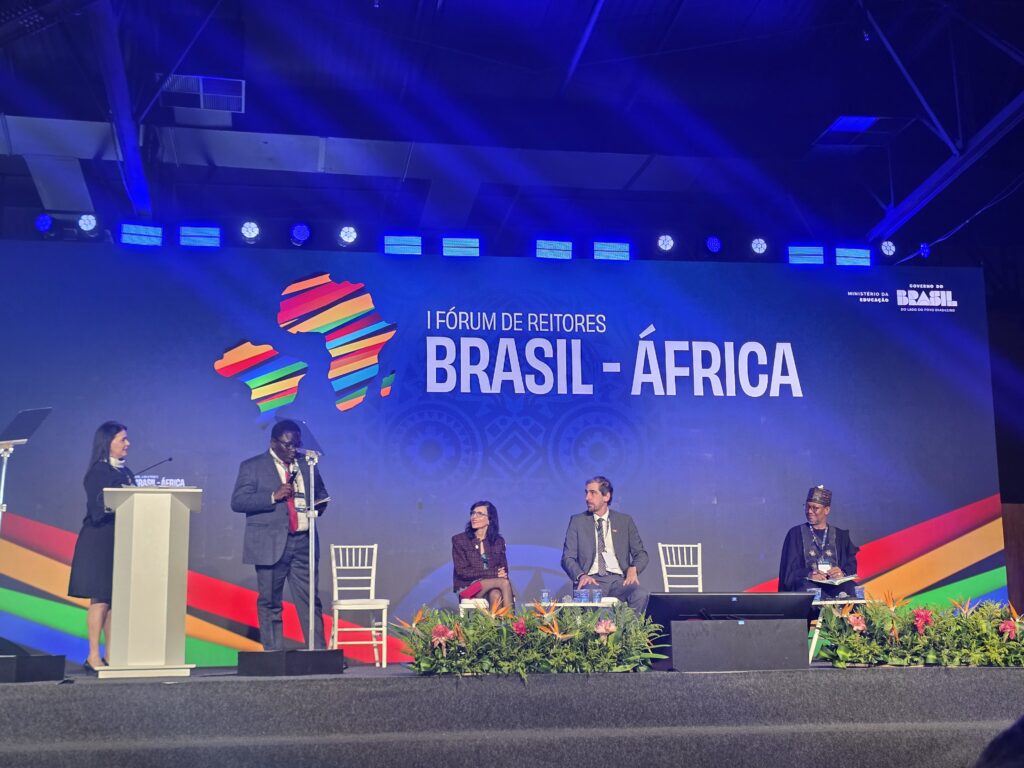
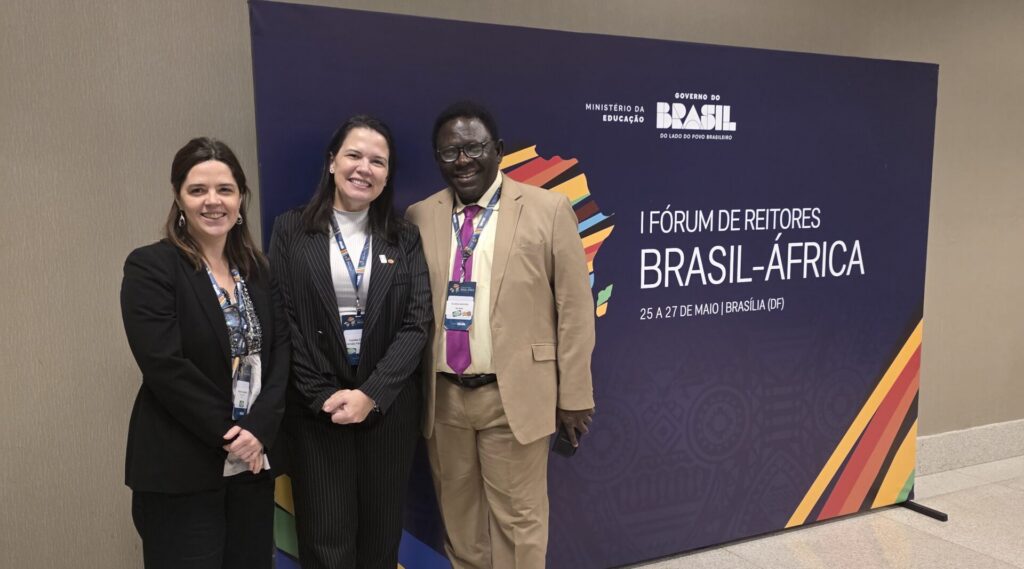
Obreal participated in the 1st Brazil–Africa Rectors’ Forum, held in Brasília from May 25 to 27, 2026. The Forum was organized by Brazil’s Ministry of Education, CAPES, and ANDIFES, and brought together more than 150 Brazilian and African university leaders, academic associations, and multilateral actors.
The event aimed to strengthen higher education, scientific, technological, and cultural cooperation between Brazil and African countries. Its program included thematic panels, bilateral meetings, workshops, and sessions dedicated to the development of new academic partnerships.
Obreal’s participation focused on the connection between Brazil–Africa cooperation and broader interregional dialogue processes involving Latin America and the Caribbean, Africa, and Europe. In this context, Obreal contributed to a seminar on “Interregional Dialogue and South–South Cooperation,” presenting the Interregional Dialogue Process and its Fourth Interregional Dialogue on Education and Development.
The presentation highlighted the importance of linking South–South cooperation initiatives to wider interregional processes in order to avoid fragmentation, support continuity, and strengthen shared agendas in higher education, science, innovation, and development.
Shared agendas and academic networks
Professor Olusola Bandele Oyewole, Secretary-General of the Association of African Universities, also referred to Obreal and the Interregional Dialogue Process during his seminar on strategic knowledge partnerships for Africa–Brazil–Latin America and Caribbean higher education cooperation. His contribution underlined the relevance of academic networks in supporting structured and coordinated cooperation between regions.
During the Forum, Obreal held bilateral meetings with Brazilian and African universities and higher education networks present at the event. These exchanges opened possibilities for future collaboration around interregional dialogue activities, joint workshops, COIL initiatives, project development, and engagement with Brazilian higher education actors.
The Brasília Charter and next steps
The Forum concluded with the adoption of the Brasília Charter, which reaffirms the commitment of participating institutions to deepen Brazil–Africa academic cooperation based on solidarity, reciprocity, horizontality, and the shared production of knowledge. The Charter also identifies priorities such as academic mobility, scientific networks, social impact, teacher training, open science, inclusive internationalization, climate change, food security, energy transition, digital sovereignty, ethical artificial intelligence, youth employability, and entrepreneurship.
For Obreal, the Forum represented an important space to engage with Brazilian and African partners and to identify areas where its interregional experience can contribute to ongoing cooperation processes. It also provided an opportunity to explore future collaboration with universities, networks, and institutions interested in strengthening links between Brazil, Africa, Latin America and the Caribbean, and Europe.
Follow-up discussions involved, among others, UNESP, the Federal University of Lavras, GCUB, ANDIFES, the Federal University of São João del-Rei, the Federal University of Fronteira do Sul, and representatives from Brazil’s Ministry of Foreign Affairs and Ministry of Education.
The Forum confirmed the growing institutional momentum behind Brazil–Africa cooperation and the potential for universities and academic networks to play a central role in building more inclusive, horizontal, and impact-oriented partnerships across regions.